

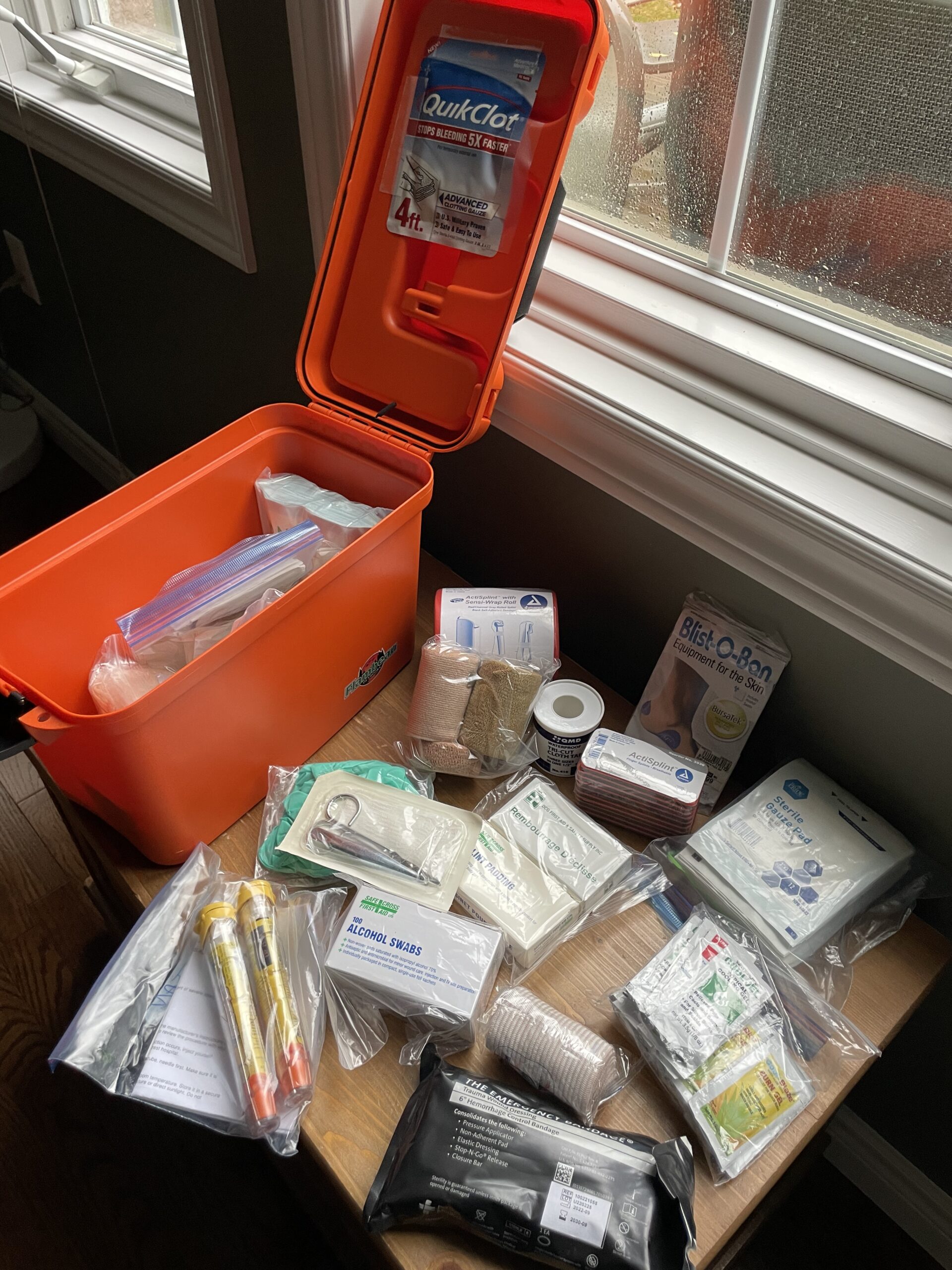
When you’re days away from professional medical care, a well-prepared first aid kit becomes one of the most important pieces of gear you carry. Offshore cruisers and overlanders often find themselves far from clinics and hospitals. Being ready makes the difference between a manageable inconvenience and a dangerous situation.
What You’re Most Likely to Face
For most travelers, injuries tend to be minor: scrapes, cuts, sunburn, or allergies. We’ve dealt with bumps, bruises, headaches, and seasonal reactions — nothing serious, but always a reminder of how much harder even small issues can feel when you’re remote.
Consulting a Travel Doctor
Before a long journey, schedule a visit with a travel doctor. In Canada (and many other countries), they can prescribe medications specifically for offshore or remote travel. Typically, they’ll provide a full dosage round for each family member, especially for antibiotics.
Other common prescriptions include:
- EpiPens for severe allergies
- Anti-nausea medication
- Anti-diarrhea pills
Depending on your health plan, some or all may be covered. Having them onboard provides peace of mind when you’re days away from a pharmacy.
How We Organized Our Kit
We split our first aid kit into two waterproof bins. The Plano flare box has been perfect for keeping everything dry and secure.
👉 Plano Waterproof Box (affiliate link)
Bin One: Cuts, Breaks, and Burns
- Bandages and gauze
- Antiseptic wipes and ointments
- Splints and wraps (including a finger splint)
- Steri-strips and large bandages for significant cuts
- Burn gel
- Tourniquet
Bin Two: Medications and Reactions
- Antibiotics (with full dosage rounds for each person)
- Pain relievers
- Antihistamines and EpiPens
- Anti-nausea and anti-diarrhea meds
- Rehydration salts
- Dental repair paste (for temporary crown or filling fixes)

Separating the kit made it quick to grab what we needed, especially if kids may be the ones rummaging through it in an emergency.
Start With the Basics
Your kit doesn’t have to be massive. Start with the essentials, get professional input, and adapt as you go. For us, thoughtful preparation, medical advice before departure, and a well-organized system were enough to handle the challenges we faced.
👉 In Part 2 of this series, we will share how training, knowledge, and mindset that matter just as much as gear, including how we handled a ruptured eardrum offshore and the unusual medical tools some cruising families carry.