

Save on sleep. Spend on adventure.
Not every travel day needs to end in a cozy campground. Sometimes, you just need a safe, quiet place to sleep so you can recharge and hit the ground running the next morning. That’s where free camping comes in.
We’ve spent the majority of our nights in our RV, van, or tent on public lands, tucked into trailhead lots, ski resort parking areas, or pulled off dusty backroads. We don’t do this because we’re roughing it, but because it frees up our time, energy, and budget for what really matters: the experiences we’ll have the next day.
Whether you’re road-tripping across Canada or weaving through the byways of the U.S., here’s how we find free, legal, and often beautiful places to rest up for the next leg of the journey.

What Is Free Camping?
Free camping (also called boondocking or wild camping) means sleeping outside of paid campgrounds, without hookups, reservations, or fees. That could mean public lands like BLM or Crown land, trailhead parking lots, or even businesses that allow overnight parking.
The freedom is incredible, it feels like a cheat code, and the savings stack up quickly. Instead of spending $40–$80 a night on a campground, we can put that toward a museum, a ferry ride, bike rentals, a local food tour, or simply fill up the tank and keep going.
Where to Look for Free Camping
We use three main tools to track down great spots:
iOverlander
Our top pick. This free app shows wild camping spots with GPS pins, descriptions, and reviews from fellow travelers. You’ll know in advance if the road is rough, if there’s cell signal, or if rangers enforce stay limits. We used iOverlander extensively on our Canadian East Coast trip last year and stayed in some truly incredible places.
AllStays
This RV-focused app (iOS only) was the OG for us and helped us locate rest stops and Walmarts where we could park for the night. Its filters and offline map support are great for trip planning.
FreeCampsites.net
A simple, free website where travelers share camping spots and notes. It’s great for cross-checking other apps, especially when you’re heading somewhere new.
Since most free camping sites are crowdsourced, it’s important to check across apps to locate all your options.
Understanding the Different Types of Free Camping
Public Lands (U.S. and Canada)
BLM Lands (U.S.)
These federally managed lands span 245 million acres in the western states. You can usually stay for 14 days per site, with obvious guidelines regarding packing out waste, avoiding private property, and respecting local restrictions.
Crown Lands (Canada)
Crown land makes up the majority of Canada’s landmass, especially in Ontario and British Columbia.
- In Ontario, you can stay 21 days per year at a given location.
- In BC, most Crown land allows 14 days per site.
Always check local maps like Ontario’s Crown Land Use Policy Atlas, BC’s iMapBC, and blm.gov/maps for boundaries and rules.
Trailhead or Parking Lot Overnights
Some national, provincial, and municipal parks allow quick overnight stays in designated parking areas which are perfect for late arrivals or early starts. Apps like iOverlander will note if it’s a one-night stop or a no-go.
An oldie but a goodie is Walmart. We’ve built some great memories arriving late, spending the night, and heading into the store for early morning eats. Truck stops, museums, boat launches and some carpool lots even offer/tolerate free overnight stays. Put effort into looking at and following the signage. These lots are rarely scenic, but they’re legal, convenient, and give you a fresh start the next day.
We’ve also stayed overnight at several of North America’s top ski resorts, which means we are ready for first tracks in the morning. Of course, we called ahead in advance, were super friendly and asked where we could park. They often had us park in a specific lot or near the garage.

Why We Love It: It’s Not About the Campsite
When we’re free camping, we’re not looking for the perfect picnic table or fire pit. We’re looking for rest, a chance to get off the road, cook a meal, and reset. Often, we find the free campsites more convenient than booking reservations, the drive to and the check-in process at a typical campground.
Every dollar we don’t spend on a place to sleep is one more we can put toward something memorable the next day. That’s the trade-off. Less spent on sleep, more spent on life.
Tips for Free Camping Success
- Check Reviews and Apps
Cross-check between iOverlander and FreeCampsites.net to verify road access, rules, and recent traveler feedback. - Download Offline Maps
Cell service is unreliable in wild areas. Download maps and campsite listings in advance. - Respect the Land
Pack out all waste, follow fire bans, and avoid camping too close to water. Use official tools to avoid private or Indigenous lands. - Be Self-Sufficient
Have a full tank, water, food, and a backup plan. Some of the best spots are remote and basic, and that’s exactly the point. - Be Discreet
We aren’t talking about sneaking around, just avoid playing loud music or setting up your full awning and camp chairs. Don’t make it a party. - Be Safety Conscious
Assess sites for safety, back into spots for easy exits, keep doors locked, and secure valuables. You don’t need to be afraid, but you should be prepared. Use common sense. - Be Prepared to Leave
In our over a thousand nights of free overnight stays, whether that be on land or on the sea, we’ve only been asked to leave a place once. We think being polite and respectful is extremely important, and being ready to comply with requests of land owners or authorities.
Some Real Nights on the Road
Some of our most memorable stays have been on wild campsites. As they say, sometimes when you have the lowest expectations, you end up the happiest. Some recent highlights for us include:
- An oceanside site in Digby, NS, found on iOverlander, where we watched the immense Fundy tides and an amazing sunset
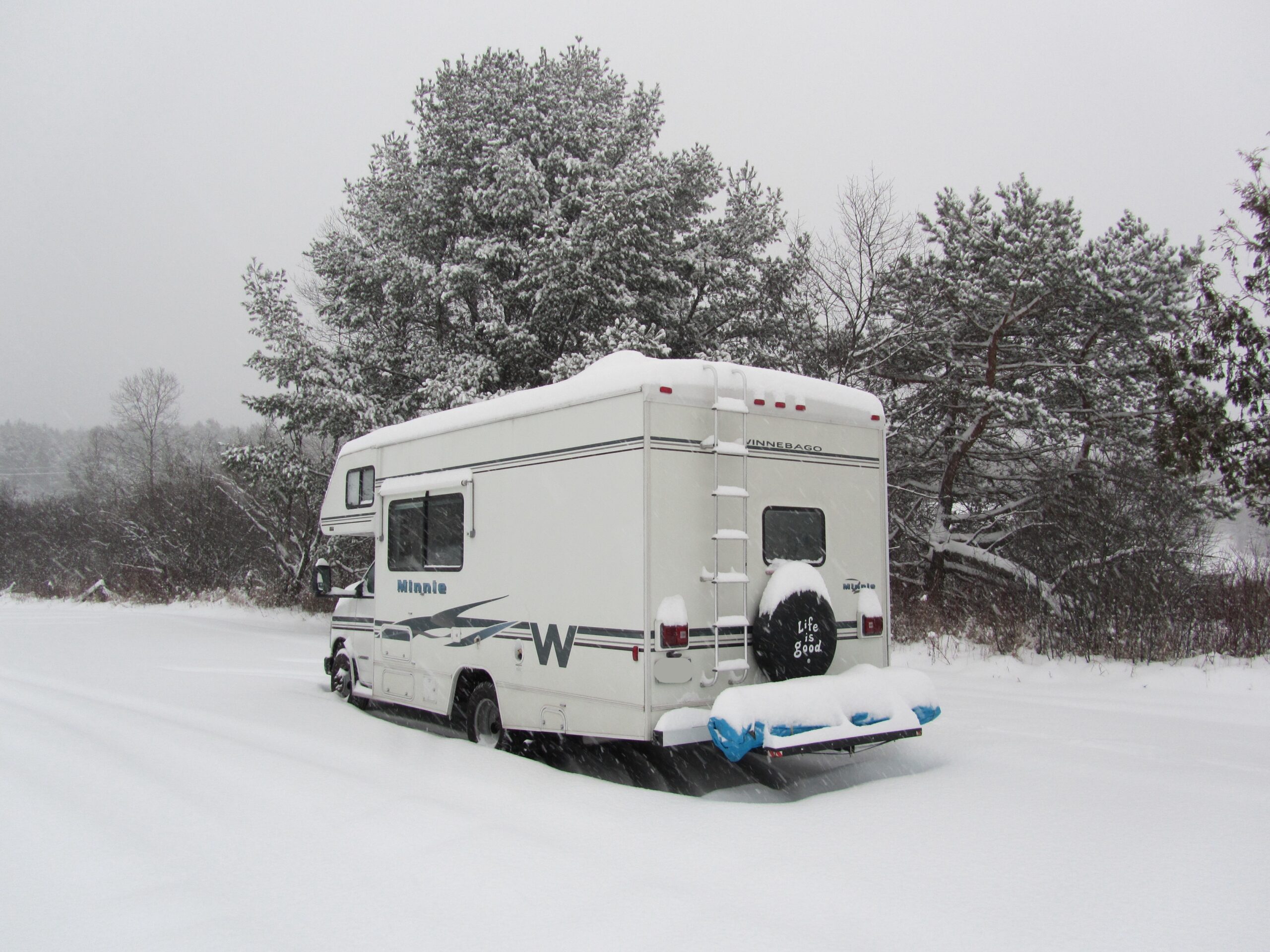
- A slopeside lot in Vermont, with 15 inches of fresh powder overnight and us ready to catch the first tracks
- A park near downtown Montreal, QC, with quick access to explore the city the following day
For us, these aren’t the destinations, but they make more of our destinations possible.

Final Thoughts
Free camping is one of the smartest ways to travel farther, connect deeper, and save for what you truly enjoy. If your goal is to experience more, free camping helps you do just that.